Lime Plaster vs Modern Cement in Humid Homes: Which Material Helps Walls Breathe Better?

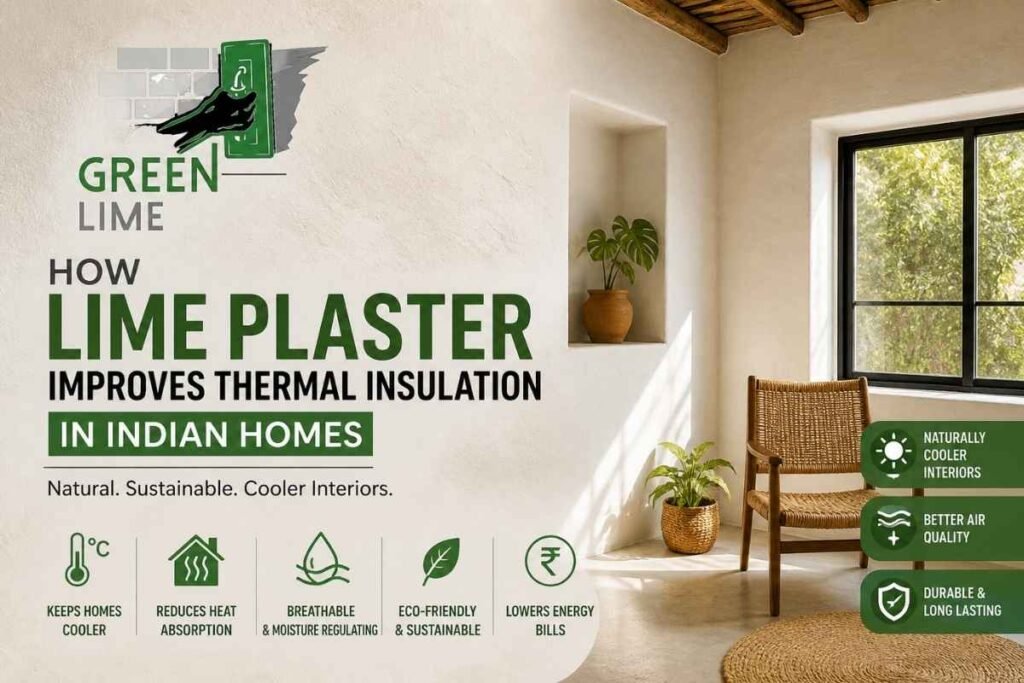
How Lime Plaster Improves Thermal Insulation in Indian Homes Naturally and Sustainably
May 4, 2026
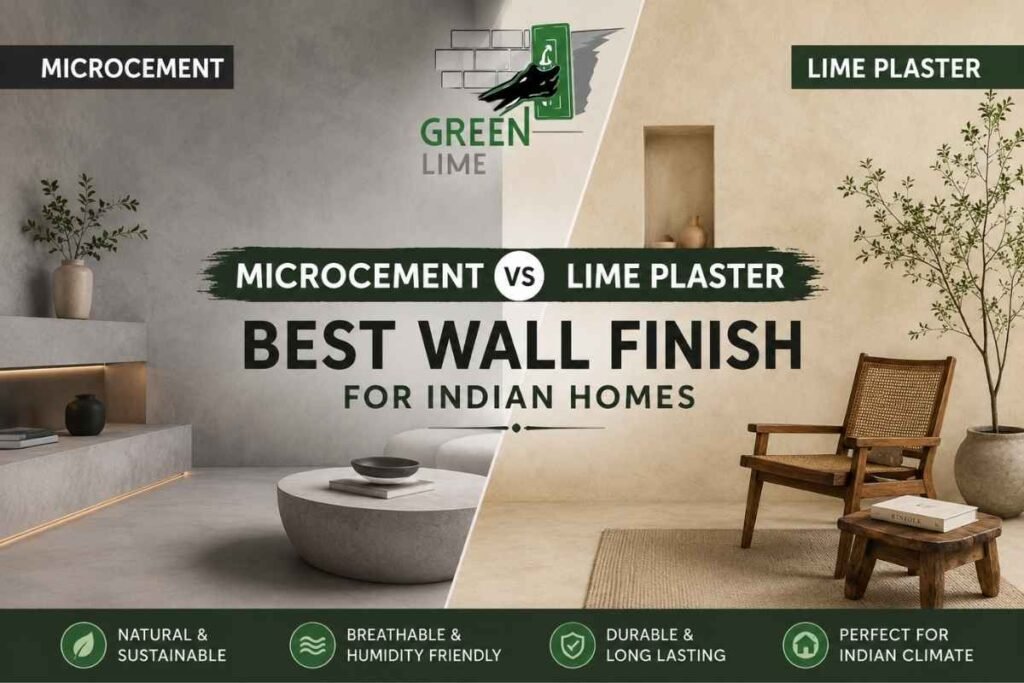
Microcement vs Lime Plaster: Best Wall Finish for Indian Homes
June 13, 2026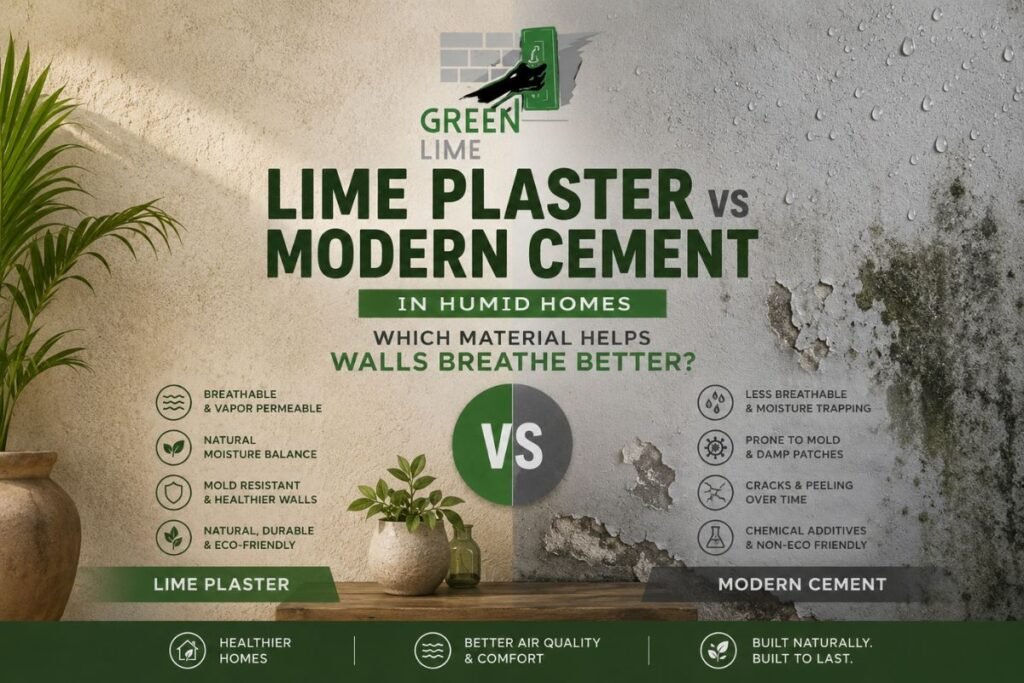
Humidity is one of the biggest challenges for homes, especially in coastal regions, monsoon-heavy areas, and naturally damp climates. Excess moisture in walls can lead to peeling paint, mold growth, damp patches, structural weakening, and unhealthy indoor air quality. This is why the choice of wall finish becomes more important than many homeowners realize.
Among the most debated materials are lime plaster and modern cement plaster. Both are widely used in construction, but they behave very differently in humid homes. While cement is often chosen for strength and speed, lime plaster is valued for breathability, moisture regulation, and long-term wall health.
So which material actually helps walls breathe better in humid conditions? The answer lies in understanding how each material handles moisture.
What Does “Breathable Walls” Really Mean?
A breathable wall does not mean air passes directly through it. Instead, it refers to a wall’s ability to allow moisture vapor to move in and out without trapping water inside.
In humid environments, walls naturally absorb moisture from the atmosphere, rainfall, indoor steam, and daily temperature changes. If this moisture gets trapped, problems begin.
Breathable walls help reduce:
- Damp patches
- Mold growth
- Paint peeling
- Efflorescence
- Surface cracking
- Long-term wall damage
This is where lime plaster and cement perform very differently.
How Modern Cement Behaves in Humid Homes
Cement plaster is strong, dense, and widely used because of its fast setting time and rigid structure. It creates a hard surface that protects walls against external wear.
However, in humid conditions, cement has a limitation. It is less breathable.
Because cement plaster is dense and relatively non-porous, it can trap moisture inside wall systems. When humidity enters through capillary action, condensation, or substrate moisture, the trapped dampness may stay inside longer.
This often causes:
- Bubbling paint
- Damp interiors
- Salt deposits
- Surface cracks
- Mold-prone corners
- Internal wall stress
In many humid homes, cement protects but does not regulate moisture effectively.
Why Lime Plaster Performs Better in Moisture Management
Lime plaster behaves differently because it is naturally breathable and vapor permeable.
It allows moisture vapor to move through walls and evaporate rather than staying trapped. This ability helps maintain a healthier moisture balance.
In humid homes, this reduces the risk of internal dampness.
Lime plaster supports:
- Moisture release
- Better vapor exchange
- Reduced trapped condensation
- Healthier wall drying cycles
- Less peeling and blistering
- More stable wall behavior
This makes lime especially useful in tropical, coastal, and monsoon-heavy regions.
Lime Plaster vs Cement: Flexibility Matters
Humidity causes expansion and contraction.
Walls absorb moisture, dry out, and react to changing temperatures. Over time, rigid materials can develop stress.
Cement plaster is hard and brittle. It may crack under repeated movement.
Lime plaster is softer and more flexible.
That flexibility allows it to adapt better to:
- Thermal changes
- Humidity cycles
- Small building movement
- Surface expansion
- Older masonry behavior
In humid environments, flexibility often improves durability.
Mold and Indoor Air Quality
Poor moisture management often leads to mold growth.
When dampness remains trapped behind dense plaster or synthetic paint, mold spores thrive in dark and wet areas.
Lime plaster naturally discourages this.
Its alkaline nature and breathable structure create conditions that are less favorable for mold growth.
This can improve:
- Indoor air quality
- Wall hygiene
- Moisture control
- Long-term comfort
For families living in humid regions, this becomes a practical health advantage.
Which Material Lasts Longer in Humid Conditions?
Durability depends on application, climate, and maintenance.
Cement plaster can be strong but may degrade visually when moisture remains trapped.
Signs include:
- Cracking
- Hollow patches
- Surface scaling
- Paint damage
- Persistent damp spots
Lime plaster may appear softer, but it often ages better in breathable wall systems.
Because moisture can move naturally, lime reduces long-term internal stress.
It does not always mean lime lasts forever, but it often ages more gracefully.
Aesthetic Performance in Humid Homes
Wall beauty matters too.
Cement plaster usually creates flat, machine-finished surfaces. While neat, it can feel lifeless and may show damage sharply over time.
Lime plaster offers:
- Soft matte texture
- Natural variation
- Handcrafted appeal
- Warmer visual depth
- Organic wall character
In humid homes, where stains and aging can become visible, lime often looks more natural rather than damaged.
Its aging process usually enhances character rather than ruining appearance.
Which Homes Benefit Most from Lime Plaster?
Lime plaster works especially well in:
- Coastal homes
- Monsoon-prone houses
- Heritage buildings
- Stone and brick masonry homes
- Eco-conscious architecture
- Premium earthy interiors
- Naturally ventilated homes
If moisture regulation is a major concern, lime often outperforms rigid cement systems.
For homeowners planning breathable finishes, a professional Lime Plaster Service Pune can help choose the right plaster system based on humidity, structure type, and wall performance.
Decorative Lime Finishes in Modern Design
Lime plaster is no longer only functional. It is now widely used in luxury interiors.
Decorative finishes bring together beauty and breathability.
One refined example is Araish Plaster in Gujarat, known for polished elegance, handcrafted texture, and traditional depth.
It works beautifully in villas, boutique spaces, heritage homes, and premium architectural interiors.
This proves lime is not only practical for humidity, but also visually timeless.
Why Design Planning Is Important
Material choice alone is not enough.
Wall breathability depends on:
- Surface preparation
- Moisture source analysis
- Substrate compatibility
- Finish thickness
- Ventilation
- Paint or coating selection
Improper application can reduce lime plaster performance.
That is why working with an experienced Architectural Design Consultant helps ensure the plaster system supports both design and environmental behavior.
Good design protects long-term wall health.
So Which Material Helps Walls Breathe Better?
If the primary concern is strength, speed, and conventional construction, cement plaster may still be used.
But if the goal is:
- Moisture control
- Breathability
- Reduced trapped dampness
- Healthier indoor walls
- Better aging
- Lower mold risk
- Natural wall character
Then lime plaster generally performs better in humid homes.
It works with moisture rather than trapping it.
That is a major difference.
Final Thoughts
In humid environments, walls need more than protection. They need balance.
Modern cement plaster offers rigidity and speed, but its dense structure can trap moisture, which may lead to dampness, cracking, and indoor discomfort.
Lime plaster provides a breathable alternative. Its vapor permeability, flexibility, moisture regulation, and natural durability make it better suited for homes exposed to humidity.
For Green Lime, lime plaster is more than a traditional material. It is a practical solution for healthier, stronger, and longer-lasting walls where breathability truly matters.